

Reviewed · KRABI ELEPHANT SANCTUARY TOURS
Krabi: Elephant Feeding Program
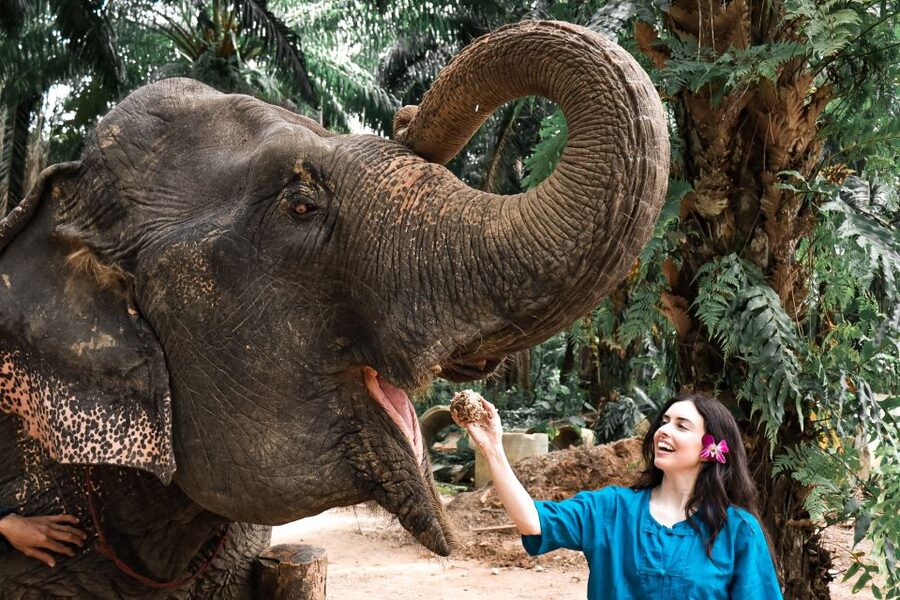
Krabi’s elephant feeding program keeps things simple: you prepare food, meet retired and rescued elephants, and feed them under the watch of their caretakers. Making protein balls and fruit meals gives the visit more substance than a quick photo stop. I like the close contact, and I like that the caretakers explain how to behave around each animal. The main drawback is the short 30-minute duration, so this is a brief introduction rather than a full sanctuary visit.
I also like the small details that make the meeting feel personal. Each elephant has its own character, and you can watch those differences as an animal takes food from your hand. The staff have been praised for their kindness and clear explanations, while a February visit found the setting uncrowded enough for good photographs. Bring modest expectations about time, though: the price is reasonable, but the clock moves quickly.
Key points at a glance
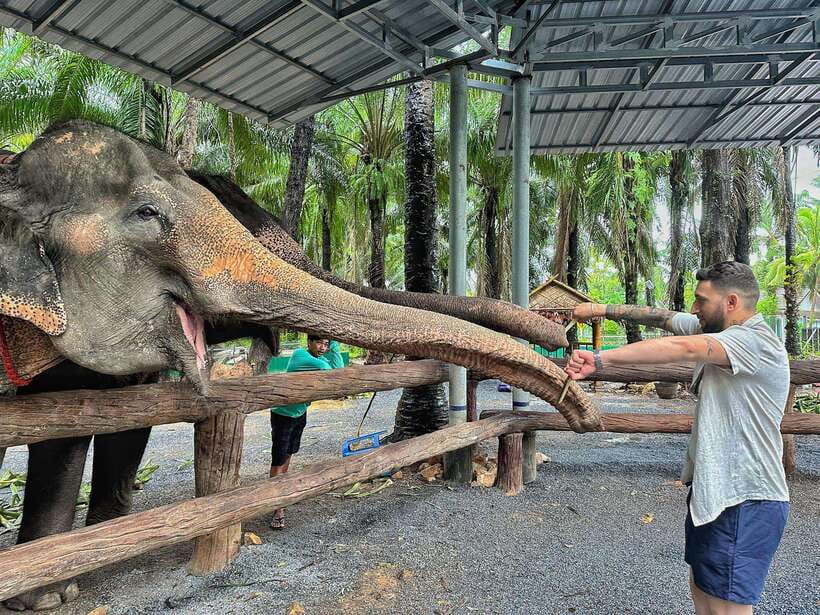
- Prepare food before feeding: You help make fruit meals and protein balls with provided cooking materials.
- Meet retired and rescued elephants: The shelter provides a home for elephants formerly used in tourism and logging.
- Feed under close supervision: Caretakers show you how to act around the animals and remain with you during the visit.
- Learn behavior and background: The guide explains Asian elephant history, eating habits, and individual personalities.
- Useful hotel pickup area: Transfers are included from Ao Nang, Klong Muang, and Nopparat Thara.
- A compact 30-minute visit: It suits a short holiday schedule, but you should not expect a half-day sanctuary program.
What the Krabi Elephant Shelter experience is really about
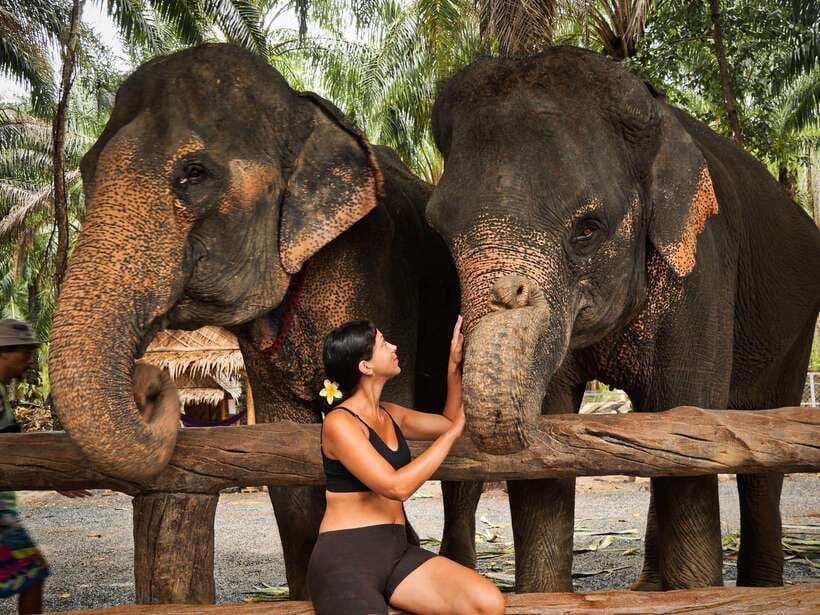
This is a hands-on feeding visit, not a long wildlife excursion. You meet the guide at Krabi Elephant Shelter, learn the basic rules, help prepare food, and feed the elephants yourself. The contact is direct but structured, with caretakers showing you where to stand and how to behave.
That structure matters. Elephants are large, powerful animals, and feeding them should not be treated like tossing snacks to farm animals. The program places the caretakers between you and guesswork. You can focus on the animal’s face, trunk, mouth, and movements while someone explains what is happening.
The shelter is home to retired and rescued elephants from the tourism and logging industries. That background gives the visit a useful purpose. You are not simply stopping for an animal photograph. You are learning why these elephants are now being cared for in a shelter setting and how their daily needs shape the program.
The experience received a 4.8 rating from 102 reviews, and the strongest praise centers on three things: friendly staff, clear information about elephant behavior and food, and enough time to interact without a crowded feeling. Those points are important because a short animal encounter can feel rushed if the group is too large or the staff offers little explanation.
More time with the elephants:
- Krabi: Elephant Sanctuary (near Ao Nang) Visit
★ 4.9 · 1,036 reviews - Krabi: Highlights Tour with Krabi Elephant Shelter
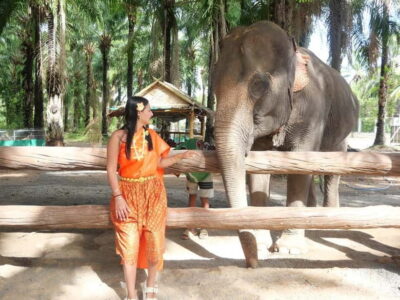
★ 5.0 · 131 reviews - Krabi: Elephant Feeding Program with Traditional Thai Dress
★ 4.8 · 124 reviews
Meeting the caretakers and learning the rules
Your first task is to meet the guide and the elephant caretakers. The guide can speak English or Thai, and the caretakers stay with you through the feeding. No individual guide names are supplied, but the staff’s role is clear: they explain the animals, prepare you for contact, and supervise the activity.
Expect practical instruction rather than a long classroom talk. You learn how to behave around the elephants and how to approach feeding in a controlled way. The exact order may vary, but the visit centers on seeing how the elephants are treated, learning about their behavior, and preparing their food.
I value this part because it helps you read the animal in front of you. An elephant may reach with its trunk, wait, turn away, or show interest in one type of food more than another. The program presents each animal as an individual with its own personality, not as a prop for photographs.
The staff’s care is also part of the lesson. You get to see the caretakers working with the elephants and explaining their needs. That does not turn a 30-minute visit into a full study of elephant welfare, but it gives you a better frame for the encounter.
Preparing fruit and protein balls
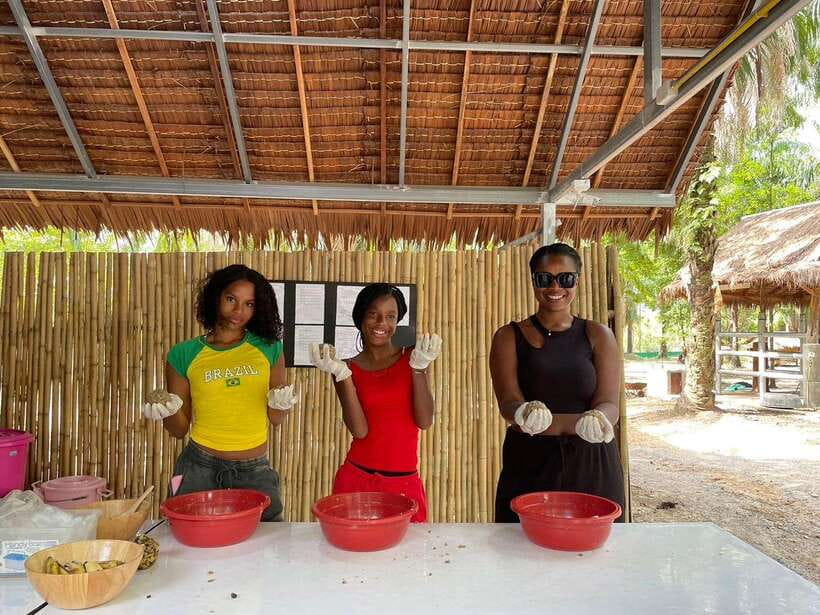
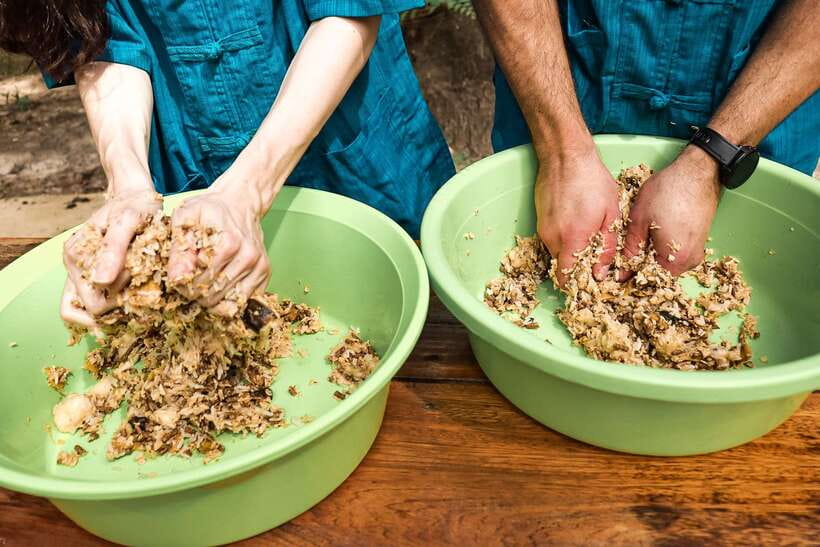
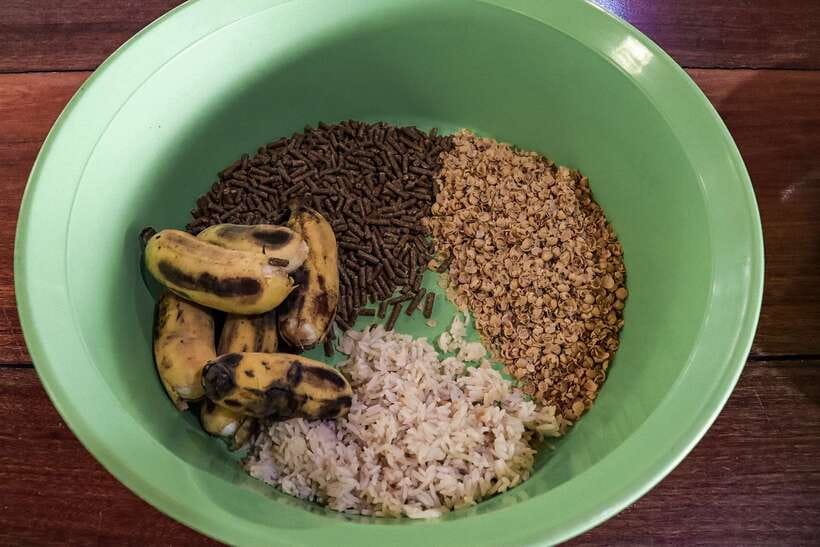
The food preparation is one of the most distinctive parts of the visit. Seasonal fruit is included, and you receive the cooking materials and equipment needed for the activity. One of the most memorable tasks is making protein balls for the elephants.
This small cooking session gives you something to do before the feeding begins. Instead of waiting for an elephant to arrive and then posing with a piece of fruit, you help prepare what the animal will eat. That extra step makes the experience feel more connected and interactive.
The food is prepared under the caretakers’ supervision. You do not need to bring ingredients or equipment, and coffee, tea, and drinking water are provided. Meals for people are not included, so plan to eat separately if you need more than a snack or drink.
The seasonal fruit is practical for the tropical setting, but the protein balls add the more unusual touch. If you are booking mainly for photographs, this part still helps because your hands are occupied and the visit has a clear sequence. If you are interested in animal care, it gives you a simple look at how food can be prepared for elephants in a shelter environment.
Feeding an elephant by hand
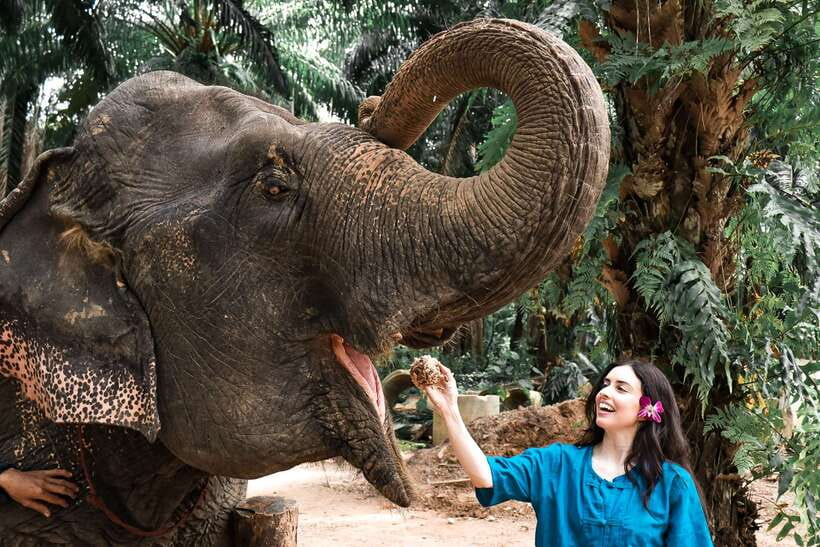
Once the food is ready, you feed the elephants yourselves. The caretakers remain nearby and guide you through the contact. You can watch the trunk work, see how the elephant takes food, and notice how quickly the animal responds to a familiar meal.
This is the emotional center of the visit. Hand-feeding creates a direct connection, but it also demands attention. You need to listen to the instructions, keep your movements calm, and let the caretakers manage the interaction. The program is designed so you can take part without having to guess what to do.
One useful detail is that the elephants do not all behave in exactly the same way. The staff explain their personalities, and you may find that one animal is eager while another is more reserved or selective. That difference makes the meeting feel less mechanical.
Photographs are possible, and one February visit had enough time for pictures with the elephants. Still, a photographer is not included, so you should arrange your own camera or phone. If you are visiting with friends, family, or a partner, take turns photographing one another rather than expecting a dedicated photographer.
The feeding period is also where the 30-minute limit becomes noticeable. You have time to prepare food, listen, feed, and take some pictures, but not time for a long walk through the property or an extended animal-care demonstration. Treat this as a focused encounter.
More days out from Ao Nang:
- Krabi: Premium 4-Island Day Trip by Longtail Boat with Lunch
★ 4.5 · 4,812 reviews - Krabi: Tiger Cave, Hot Springs and Emerald Pool Jungle Tour
★ 4.2 · 2,643 reviews - Krabi: Bioluminescent Plankton, Snorkeling & Sunset Tour
★ 4.3 · 863 reviews - Krabi: 7 Islands Sunset Tour with Plankton Swim and BBQ
★ 4.0 · 808 reviews
What you learn about Asian elephants

The guide and caretakers explain the history and behavior of Asian elephants during the visit. You also learn about eating habits and the way elephants respond to their surroundings. The information is intended to help you understand the animal you are feeding, not simply fill time between photographs.
A useful lesson is that feeding reveals behavior. The trunk is not just a striking feature for pictures. It is the tool the elephant uses to reach for food and decide how to take it. Watching that process makes the animal’s movements easier to understand.
You also gain a clearer picture of the shelter’s role. These elephants were retired or rescued after working in tourism and logging. The program gives them a new home, and the caretakers explain how they are looked after.
The available information does not promise a detailed lecture on every elephant or a full conservation course. I would book it for a friendly, introductory lesson with direct contact, not for an academic presentation. The strongest educational value comes from pairing short explanations with what you can see in front of you.
How the timing affects the value
The experience costs $27 per person and lasts 30 minutes. That is a fair price if you want a compact, guided animal encounter with food preparation, hand-feeding, drinks, seasonal fruit, and hotel transfer from the main listed resort areas.
The value depends on what you want. For a family with a tight schedule, a couple fitting several Krabi activities into one day, or a first-time visitor unsure about committing to a longer sanctuary program, the short format is convenient. You get the key parts without giving up half a day.
If you want time to walk around, watch bathing, observe veterinary care, or spend a long period with several elephants, this program will feel limited. None of those longer activities are promised. The experience is best understood as a focused feeding session.
The short duration can also help younger participants stay interested, although children under 3 are not suitable for the activity. The upper age restriction is people over 95. Everyone else should still consider personal mobility and comfort around large animals, since no further accessibility details are provided.
Hotel transfers and the practical details
Hotel transfer is included from Ao Nang, Klong Muang, and Nopparat Thara. That makes the program easier to fit into a Krabi stay, especially if you are not renting a car. The supplied information does not state pickup times or the exact transfer schedule, so check availability before booking.
The visit takes place rain or shine. Krabi’s weather can change quickly, so wear clothing and shoes that can handle wet conditions. The rain policy is worth noting because you should not book this expecting an automatic weather cancellation.
Coffee, tea, and drinking water are included. Seasonal fruit is part of the elephant food preparation, but a full meal for you is not included. Plan lunch or dinner separately if this visit sits between other activities.
Free cancellation is available up to 24 hours before the activity for a full refund. You can also reserve now and pay later, which is useful when you are still arranging your Krabi plans. Starting times depend on availability.
Who will enjoy this most
I would recommend this to you if you want close contact with elephants in a short, guided setting and care about understanding the animals rather than only taking a picture. The food preparation makes it more active than a simple viewing platform.
It is a good match for couples, families with children aged 3 and above, and small groups of friends. The activity also works well when you have only a morning or afternoon free. The friendly staff and clear instruction should help first-time visitors feel more at ease.
You may want a different program if you prefer a longer sanctuary visit or if you dislike structured animal encounters. The 30-minute schedule leaves little room for lingering. You should also think carefully about booking if heavy rain would make the experience uncomfortable, since it operates in all weather.
For photography, it can work well, but only if you handle your own pictures. One visit had enough time for photographs, though that does not guarantee the same pace for every group. Keep your phone ready, but listen to the caretakers first.
My verdict on this Krabi elephant visit

I like the balance of food preparation, explanation, and supervised feeding. Making protein balls, using seasonal fruit, and learning about each elephant’s personality gives the half-hour real structure. The shelter’s work with retired and rescued elephants also gives the visit more meaning than a bare photo opportunity.
The limitation is just as clear: 30 minutes is not long. You will not receive a broad sanctuary tour or a full day of observation. At $27, though, the program offers solid value for a compact introduction, especially with hotel transfer and basic refreshments included.
Book it if you want a short, friendly encounter with clear guidance and direct feeding. Choose something longer if your main goal is extended observation or a wider look at sanctuary life.
FAQ
How long does the Krabi Elephant Feeding Program last?
The activity lasts 30 minutes.
How much does the experience cost?
The price is $27 per person.
Where does the elephant feeding activity take place?
You meet the guide at Krabi Elephant Shelter in the Krabi area of Thailand.
Is hotel transfer included?
Yes. Hotel transfer is included from Ao Nang, Klong Muang, and Nopparat Thara.
What languages are available?
The live guide service is available in English and Thai.
Do I prepare food for the elephants?
Yes. Under the caretakers’ supervision, you learn to prepare food that includes seasonal fruit and protein balls.
Can I feed the elephants myself?
Yes. You feed the elephants by hand while the caretakers supervise and guide you.
Are drinks provided?
Yes. Coffee, tea, and drinking water are included.
Are meals for visitors included?
No. Meals are not included, although drinks and seasonal fruit are provided.
Can I cancel for a full refund?
Yes. You can cancel up to 24 hours in advance for a full refund.
Does the activity operate in rainy weather?
Yes. The program takes place rain or shine.
Is the activity suitable for young children?
Children under 3 are not permitted to take part.
Is a photographer included?
No. A photographer is not included, so you need to arrange your own photographs.
Just added around Ao Nang
- Evening Couse Thai Cooking Class in Ao Nang, Krabi★ 5.0 · 6 reviews
- Ao Nang to Phuket by Green Planet Speed Boat via Koh Yao Islands★ 3.5 · 20 reviews
- Ao Nang to Koh Yao Noi by Green Planet Speed Boat★ 4.0 · 3 reviews
- Ao Nang Kayaking at Klong Rud with Hotel Transfer★ 4.0 · 5 reviews
- Ao Nang Krabi To Phi Phi Island by Ferry★ 3.5 · 3 reviews
- Aonang Fiore Zip Line Adventure in Krabi★ 4.5 · 12 reviews
- Krabi: South Kayak Klong Root Kayaking Tour★ 5.0 · 7 reviews
- Krabi: Ya’s Cookery Late Afternoon Thai Cooking Class★ 4.7 · 35 reviews
Krabi Elephant Sanctuary Tours, compared.
Elephant Bathing Session at Krabi Elephant Shelter
Read our review →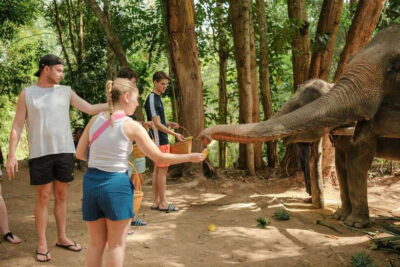
Elephant Care House Guided Tour with Hotel Transfers
Read our review →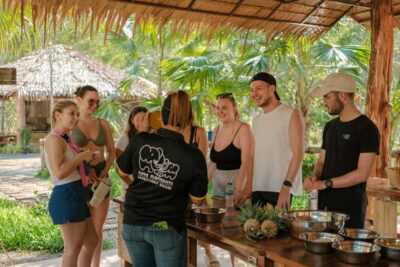
Elephant Feeding Program with Traditional Thai Dress
Read our review →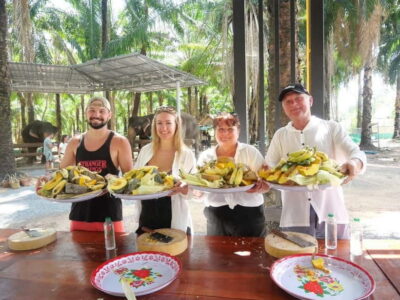
Ethical Elephant Sanctuary & Tiger Cave Temple Tour
Read our review →Browse the lists this tour appears in